
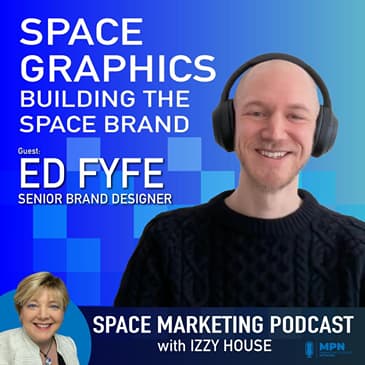
Join Izzy as she journeys to the graphic side of marketing and chat with Senior Brand Design and visual storyteller,
Graphics and images continue the brand’s story on a visual level transforming the narrative into a visual language that resonates and connects with audiences if it is done well. Together, they work harmoniously to capture attention, create a connection, build brand recognition, and leave a lasting impression. In an era where consumer engagement is vital, understanding the importance of storytelling and graphic design is essential for brands looking to stand out in the ever-changing market.
Ed Fyfe
Senior Brand Designer
CHAPTERS:
01:19 The value of graphics and developing a story
03:15 Meet Ed
07:07 Creativity
07:42 Ed Fyfe Design
08:36 Change only when it ceases to be effective
09:35 Imagery develops a brand
11:40 Merchandising a brand
21:04 Repurposing materials
26:07 Ai in graphic design
26:42 Mailer
33:00 SaxaVord Spaceport and their podcast
38:31 The next 10-20 years
41:33 Space for Kentucky
45:56 Tide
48:27 Final Thoughts
ABOUT IZZY
Izzy's website - https://izzy.house
Author of Space Marketing: Competing in the new commercial space industry AND Space Marketing: Spaceports on Amazon and Audible - https://bit.ly/Space-Marketing
Podcast host for Space Marketing Podcast - https://spacemarketingpodcast.com
Organizer for Space for Kentucky Roundtable - https://spaceforkentucky.com
Hosted by Simplecast, an AdsWizz company. See pcm.adswizz.com for information about our collection and use of personal data for advertising.
[00:00:00] My dad works in B2B Marketing, but I never really knew what that meant. Then one day my
[00:00:05] dad came by my school for career day and told everyone in my class he was a big row-as-man.
[00:00:11] Then he just kept saying things like, the bigger the row-as, the better. Over and over.
[00:00:16] My friend still laughing me to this day. I think it means calculating or returning on ad spend?
[00:00:23] One thing's for sure. I'll be known as the row-as-man's kid for the rest of my days. Why can you just
[00:00:29] be a fireman or a lawyer? Why? You ruined my life, dad. Not everyone gets B2B, but LinkedIn has the
[00:00:37] people who do and with ads on LinkedIn you'll be able to reach people based on job title, industry,
[00:00:42] likelihood to buy and more. Start converting your B2B audience into high-quality leads today.
[00:00:48] We'll even give you $100 credit on your next ad campaign. Go to LinkedIn.com slash MPN
[00:00:53] to claim your credit. That's LinkedIn.com slash MPN. Terms and conditions apply. LinkedIn,
[00:00:58] the place to be. To be. You may know you're listening to this show along the marketing podcast
[00:01:02] network, but did you know there are other great shows on MPN to help your business.
[00:01:07] Christie Hiler hosts a fantastic podcast called Own It. Christie, tell us more about the show.
[00:01:13] Own it is all about celebrating women and non-binary advertising agency owners. We talk about buying
[00:01:18] out of the voice club of advertising because less than 1% of ad agencies are owned by women.
[00:01:23] And where can people subscribe? You can find the podcast at untilyouownit.com.
[00:01:27] We're also on the Marketing Podcast Network at MarketingPodcast.net and of course you can
[00:01:32] subscribe wherever you get your podcasts. You harder go subscribe. Welcome to the Space Marketing
[00:01:39] Podcast where we look at marketing principles, strategies and tactics through the lens of space.
[00:01:46] Hi I am your host Easyhouse and this year we will meet the space industry professionals
[00:01:52] that focus on promoting their company and space. On this episode we continue to meet with
[00:01:58] space marketing professionals on the agency side. On this episode we will meet Ed5,
[00:02:04] senior brand designer with ed5 design. So lift off in 3, 2, 1!
[00:02:11] Welcome to the Space Marketing Podcast. Information relating to our discussion today and links
[00:02:28] to the video version can be found in the episode show notes on spacemarketingpodcast.com.
[00:02:35] Please like and subscribe to the podcast. It will help more people reach beyond the atmosphere.
[00:02:43] Information in this episode is for entertainment and information only. Please consult a professional
[00:02:50] for your specific situation. In today's fast paced world, the partnership between storytelling
[00:02:56] and graphic design has become a crucial factor for brand success. It is more than just creating a
[00:03:04] visually appealing image. It is about weaving a narrative that connects with people on a personal
[00:03:10] level. Storytelling gives a brand its unique voice and personality making it more than just
[00:03:17] a product or service. Graphics and images continue the brand story on a visual level transforming
[00:03:26] the narrative into a visual language that can resonate and connect with audience if it is done well.
[00:03:34] Together they work harmoniously to capture attention, create a connection, build brand recognition
[00:03:42] and leave a lasting impression. In an era where consumer engagement is vital,
[00:03:48] understanding the importance of storytelling and graphic design is essential for brands
[00:03:53] looking to stand out in the ever changing market. On this episode we will journey to the graphic design
[00:04:01] side of marketing, one of my favorite parts and chat with senior brand designer and storyteller
[00:04:08] Ed Fife from across the pond. Ed, welcome to the podcast. Thanks so much, easy, it's great to be here.
[00:04:16] Cheers to having me on. Oh thank you for coming and it was a little bit of a challenge to get it
[00:04:22] going. So I believe this is the first time I have ever had a graphics professional on the podcast
[00:04:30] which is kind of interesting because that's one of my favorite things and I recently learned
[00:04:39] the term marketer which I really do like and so we are marketers that are visual translators.
[00:04:47] Please tell the audience what is it that you do? Yeah absolutely so you know how a lot of
[00:04:57] different space industry companies at a glance kind of look like the same brand. So if you go on your
[00:05:03] phone and you just look at lots of different space industry companies websites, for example
[00:05:07] you'll notice enormous pictures of planet earth at the top maybe there's an animation maybe there's
[00:05:12] a little bit of hardware stuff over it whether that's in launcher or satellite. The issue is once
[00:05:18] you put them all side by side at a glance they all look kind of identical and the same thing kind
[00:05:23] of goes to space logos as well so if your space company put out your logo often it looks
[00:05:32] as though you dropped it into AI and asked it to spit out along list of logos and lots of those
[00:05:38] logos in the list may look identical or very close to your competitors and so my task is to
[00:05:45] solve that and help space companies with a little bit of research long term planning and graphic design
[00:05:51] like mentioned is it and blend those three components together to create a brand that's got a story
[00:05:58] that's got a bit of a long term vision and what some people like to call strategy
[00:06:04] and also has a visual identity which differentiates it from other space brands makes it memorable
[00:06:09] people that matter. And it looks on purpose. It's cute. Ideally. It looks on purpose, yeah. Yeah because
[00:06:17] a lot of companies they'll just grab some clip art and say okay that's the logo but you know with
[00:06:25] real graphic design it's more than that so let's first tell everybody kind of how do you got involved
[00:06:33] in space you know visually it's it's eye candy the whole part of space but how did you personally
[00:06:40] get interested in space? Yeah so I got into space through a film actually when I was a little kid
[00:06:47] I was probably seven years old I watched a polar 13 for the first time. I actually loved the visuals
[00:06:53] sound just the way the aesthetics worked of space travel and the interior you know the command module
[00:06:59] the color program and just all the visuals all that 1960s stuff just look absolutely gorgeous and
[00:07:06] really really got into my head fast forwards to now I used to work in consumer facing branding so
[00:07:15] that's stuff that you find in a supermarket things like nescafe things like I don't know this
[00:07:22] gets milk powder coke coke this sort of stuff so my job used to be to take those brands and when
[00:07:29] a new product came out design the packaging for it design a little bit of the campaign around it
[00:07:34] and some of the customer can see my face in cont and that took me to different places around worlds
[00:07:40] which is wonderful obviously but I always felt that there was something some of the meaning some of
[00:07:45] the purpose was was kind of missing. I love doing the work I love the people that I work with learn
[00:07:51] a great deal but for me space was always the thing and it was always sort of miggling at the back of
[00:07:57] my mind since I was a kid and so eventually I did find a job where they did a little bit of
[00:08:04] space stuff on the side and that's kind of my gateway that's how I got it. Did a tiny space project
[00:08:11] in the whole year I mostly did pet food you know docks and cats and you know the packaging for
[00:08:17] pet food but there's one tiny slither of that time where I got to work on a bit of identity
[00:08:22] stuff for a space brand and that was just it for me and as soon as that project was over I just
[00:08:29] realized I need to get on this and this is where I need to spend my time and energy really.
[00:08:34] Mostly about time I don't want to spend time doing something that I'm not 100% into and
[00:08:40] space is something I am. Right it's something that we can just pour
[00:08:45] ourselves into because that is extremely important as a creative person is that you have to believe
[00:08:51] in what you're doing and I know cat and dog food you know in products that is important. I mean if
[00:08:57] you have an animal you love the animal and it really gave you a I'm sure a very good foundation on
[00:09:04] what makes people tick you know why people gravitate towards different brands so that was huge I think
[00:09:14] in learning it was helpful for me I did brand as well so can you tell us how Ed5 design actually
[00:09:22] was born? Yeah so kind of as an extension of the story I just mentioned Ed5 design is just me
[00:09:29] it's a one-man show I connect customers employees investors and fans with the space brands that
[00:09:37] need them and ideally my focus is on not kind of building brands I don't think designers or
[00:09:45] marketers do that even in house ones. I think what I try and do is just give companies the infrastructure
[00:09:52] the branding infrastructure to grow their brand awareness so to grow the brand's rhythm build it
[00:09:59] a brand takes a long long time and if you have the infrastructure at the start it just saves you
[00:10:06] lots of effort long-term don't have to do rebrands and stuff like that you never have to ask why am I
[00:10:11] doing this where's this campaign coming from? I always had a line that I always taught when I was
[00:10:17] working with businesses that you only change a logo when it needs to be changed and some of the
[00:10:23] most prominent logos in the world have been around for decades like Coca-Cola is an example
[00:10:30] that brand logo has barely changed at all and that's the difference between a good brand
[00:10:38] and you know and you watch what's happening with Pepsi and it's this roller coaster you know if
[00:10:43] you see that logo change every every cycle and you just wonder hmm okay so Pepsi is reliant on
[00:10:50] a unyan symbol essentially the turn sideways and color and I don't know that's fine it's actually
[00:10:56] cool because it offers an alternative to Coca-Cola but at the same time for you know incubates
[00:11:03] its space brand it's just starting out if you've got all of that in place at the beginning it just
[00:11:07] saves you so much hassle down the line time and money as well. And it's not just about what you
[00:11:14] create it is about it's what they do behind it so like everybody talks about the Nike swish you know
[00:11:22] you know they paid $35 for it and it was some college student out of a garage and but it has
[00:11:29] you know the logo is important but it's also the support of the logo and the reinforcement
[00:11:36] of the logo and it becoming in an identity piece so do you want to talk a little bit about how
[00:11:42] imagery develops a brand? Yeah so storytelling and imagery of these emotional triplets so
[00:11:49] your brand has a function so if you're a space company say that you build I don't know like antennas for
[00:11:57] example and you have this functional benefit like the antennas allow you to pick up certain
[00:12:06] savingers communicates and signals to connect with audiences beyond just your team and your
[00:12:14] kind of segment it's important to bring in other elements which trigger a little bit of emotion so
[00:12:22] what's the emotional benefit that these antennas bring? So things like storytelling and imagery are
[00:12:28] these triggers they allow you to put your product in front of other people and get them on board
[00:12:34] and get them excited about it in a way that just telling them I make antennas doesn't
[00:12:39] as a really good quote I often use which says like a product is only as good as what happens in
[00:12:47] somebody's head and I think it's rich silverstein from GSN and P that said that and that kind of
[00:12:53] encapsulates brands like what we do our products is you know making visual identities and stuff
[00:13:01] like that for a designer like me but that's not actually what I'm making what I'm trying to make
[00:13:07] is what happens inside the person's head when they see those things and connect them with the
[00:13:11] brands and hopefully get motivated to act in a direction that the brand wants them to.
[00:13:18] And tell the story you know you look at like the Starbucks logo if you really look at it it's a
[00:13:24] mermaid and it has a story that's behind it that is more than just coffee it's the whole history
[00:13:32] of the brand so you know that's a really good point like the thing about that as well you know Starbucks
[00:13:41] if Starbucks is in the space industry this is just by jaded self coming up if Starbucks is in the
[00:13:46] space industry that that logo would just be a big start or it would be a planet or a swish or a
[00:13:52] little arrow moving around that planet it would not be anything out of category so to speak so
[00:13:59] you know if Starbucks in the coffee in the coffee industry it would probably just be a coffee bean
[00:14:04] if it was at this stage where the space industry is today and that's not a bad thing that just
[00:14:09] shows where we are and where we have opportunities if everybody else looks one way you always have
[00:14:15] that chance to differentiate and Starbucks not choosing to make their logo a coffee bean like say
[00:14:21] I think Costa do yeah let's say Costa it just makes it so much more memorable doesn't it you know
[00:14:27] you don't want to be the third brand that has a coffee bean as your logo ideally if you can help it
[00:14:35] or the hundredth I mean you know when I see a coffee bean it reminds me of the the community coffee shop
[00:14:41] that's you know grab the clip art and created a coffee bean logo so that is looks like everybody else
[00:14:49] you know as we're talking about space one of the things that logos are
[00:14:54] integral part of is you know product and the nasi t-shirt is seen around the world
[00:15:02] and you know with all the different that either the ball or the uh with the meatballs what they
[00:15:07] call it or the the worm and you know when we take that that logo and we make it into a tangible
[00:15:15] item please talk about how a product can actually play into a storyline yeah so a logo
[00:15:24] is um it's the sort of a component of your visual identity there are many others um and where that
[00:15:32] visual identity plays out where it can actually come alive and start interacting with people
[00:15:37] our touch points and touch points simply put just stuff that you've got stuff that people might
[00:15:43] seek so that could be anything from a business card to those satellites that you launch
[00:15:48] um to cargo containers that you ship them in um to the hair nets that you wear in clean rooms
[00:15:55] like touch points are everywhere for brands and especially selling the space industry which
[00:16:00] has this like overwhelming amount of different options available um and what you when you say
[00:16:07] products um like merchandise for example that is just one of the many touch point avenues that
[00:16:13] you can explore as a space brand in today's world um for something like merchandise though
[00:16:20] you really got to be willing to invest some energy um you see a lot of brands try it and you can
[00:16:26] see that they're spreading things because a lot of the products in their merchandise shop but
[00:16:30] essentially the same products is the next merchandise shop but with their logo on it so
[00:16:35] we Shopify um and these sort of online platforms that wonderful platforms they're incredibly easy
[00:16:42] to navigate, easy to build a shop and the downside is the lot of products in those shops are kind of
[00:16:48] just copy-paste items that anybody can access whether you are a coffee brand like Costa Rostalbox
[00:16:54] or whether you are a space company at the end of the day it will be the same bottle with a different
[00:16:58] logo on um unless you go a little bit further and going further should be an adventure really it
[00:17:04] shouldn't be something that's a chore and if it feels like a chore maybe merchandise isn't a touch
[00:17:09] point you should you know divest that much energy into um perhaps you can invest it into a different
[00:17:15] aspect of your business instead so when trying to say is yeah when you look at it as actually
[00:17:23] uh an extension of your brand you know that you can create a touch point that builds identity
[00:17:30] with your audience you know people that wear NASA t-shirts are marketing NASA but they're also
[00:17:37] telling the world I'm a space nerd so you know it can really build into that storyline as far as
[00:17:45] you know product development and if you do it well and if you do it with art and you do it on
[00:17:51] purpose so again if you just slap something on a product it's like grabbing clip art for your logo
[00:17:59] you know there's no meaning there exactly and that's the thing with these items as well like
[00:18:06] um NASA's an interesting example because NASA with NASA the merch came later like the merch really
[00:18:13] exploded in the last decade I'd say globally anyway maybe in the US it was kind of circulating
[00:18:19] before but globally you know like H&M picking it up and these big like high street shopping chains
[00:18:26] just you know buying buying the logo and applying it buying the rights to all of that came because
[00:18:32] of NASA's achievements because of what NASA has already achieved but if you're like an embryonic
[00:18:36] space brand and you just started out two years ago you're using NASA as a benchmark probably isn't
[00:18:42] the way to go it's probably um gonna I don't know it will consume some energy to make a shop with
[00:18:50] a load of products which have your your logo on them um instead of designing my merchandise items
[00:18:55] which have that that story and that meaning as well and so what I'd recommend is anybody can do
[00:19:02] this is you just sit down and and you look at your brand and you look at your products and what
[00:19:06] you offer um before you think about merchandise and you start thinking ah where are the crossovers
[00:19:12] between what we build and what we make and what we could give to a consumer what could I give my
[00:19:18] nephew for Christmas um if our company started making merchandise and not a hat or a polo shirt but
[00:19:26] something that's actually connected to what we're doing so I'll give you an example there's this
[00:19:31] company which is pretty well established it's been going through a good 50 ideas I think called
[00:19:37] NDA space comedian and they manufactured this this app like a radar set to radar set two does earth
[00:19:44] imaging um and it takes incredibly high resolution pictures of of the earth like you know there's
[00:19:49] billion other companies out there that are doing that right now um but when it comes to merchandise
[00:19:54] what NDA do is really interesting so instead of just saying we're NDA and we'll put our logo on a hat
[00:20:02] they've said we take these incredible pictures of the earth surface what would happen if we turn
[00:20:07] one of those into a beautifully designed very minimal poster that follows the NDA brand guidelines
[00:20:14] and we take photographs using our satellite radar set two of all of our locations around the world
[00:20:20] so immediately you start getting these layers happening of story first you've got the satellite
[00:20:26] then you've got all these wonderful you know locations globally showing the NDA space is this global
[00:20:31] company and then finally you've got this item which didn't encapsulate the two and is
[00:20:37] immersed in the ice ice and which you can purchase and I just think when you see examples like that
[00:20:42] happening in the space industry it really cheers me up because it's it shows that somebody sifting
[00:20:47] down and really thinking about what value can we get to customer and consumers outside the space
[00:20:53] industry inside the space industry whether that posters a gift for somebody of a conference or whether
[00:20:58] it's something that you you know I could buy for you know my knee saw something like that doesn't
[00:21:04] matter it's it's something that really enhances that brand awareness and it does it to hold on
[00:21:10] to your boosters we will be right back with ed5 senior brand designer with ed5 design after a brief
[00:21:18] message from our sponsors please like and subscribe to the space marketing podcast so you don't miss
[00:21:25] a thing
[00:21:40] my dad works in B2B marketing but I never really knew what that meant
[00:21:44] then one day my dad came by my school for career day and told everyone in my class he was a big
[00:21:49] row as man then he just kept saying things like the bigger the row as the better over and over
[00:21:56] my friends still laughing me to this day I think it means calculating a return on ad spend one
[00:22:03] thing for sure I'll be known as the row as man's kid for the rest of my days why can you just be
[00:22:09] a fireman or lawyer why you ruined my life dad not everyone gets B2B but linked in has the people
[00:22:18] who do and with ads on linkedin you'll be able to reach people based on job title industry
[00:22:23] likelihood to buy and more start converting your B2B audience into high quality leads today we'll
[00:22:28] even give you a hundred dollar credit on your next ad campaign go to linkedin.com slash mpn to claim
[00:22:33] your credit that's linkedin.com slash mpn terms and conditions apply linkedin the place to be
[00:22:39] to be when you look at merchandise as well there's just so much happening in the industry
[00:22:46] that is positive and mdh is just one example i mean save it your starship for example your space
[00:22:53] ex got starship and space ex merchandise pretty good actually but there are companies that
[00:22:58] are so inspired by what space ex is doing that they've started to go off on a tangent and create
[00:23:02] their own stuff so starships heat tiles in these big hexagonal ceramic tiles and what some
[00:23:10] company done is they've made those tiles into coasters so immediately communicates the heat
[00:23:15] component of what those tiles do it has the shape which is this iconic hexagonal shape which is
[00:23:22] all over space ex is branding a starship and finally it has this use it actually has like a
[00:23:29] like a function it's not just something that you you know stick on your desk or hang on a wall
[00:23:35] it actually has value as a coaster and they've done space shuttle ones and all sorts as well
[00:23:40] which is kind of interesting with repurposing it gets way more exciting so it goes up another level
[00:23:48] so there's a company called Yin and they're a jewelry company quite a sort of mid-range jewelry
[00:23:53] company they're not like super fancy they're not Tiffany's but you know they've got a young
[00:23:58] following and they sell a few skews and collections which is nice and they've done a collaboration
[00:24:04] with a launch company called Galactic Energy where they actually have their logo the Yin logo
[00:24:10] the jewelry company logo on the delivery of Galactic Energy's series launch vehicle and when those
[00:24:17] launch vehicles dump their stages Yin teams drive out to the fields where they fall in and start
[00:24:26] getting to work they start harvesting the metal and what they do with that metal is they then
[00:24:31] build that into jewelry which is then sold to consumers but it's done as this collaboration it's
[00:24:36] an out of sector brand jewelry and it's a very much in-sector brand which is Galactic Energy
[00:24:41] and they have this partnership to make these merchandise items out of repurposed material
[00:24:46] and it's just wonderful to see thinking like that happening in the space sector there's another
[00:24:50] brand called Wehranback which may come Swiss watches like Luxury Swiss watches out of flown
[00:24:56] Soyuz boostings but I think now with the with the geophilicical climate it'll be harder and harder
[00:25:02] to reclaim those so yeah going closer to home is probably the way to go so if you're a launch
[00:25:08] launch brand obviously it's an option you know you've got this hardware it's unless it's reusable
[00:25:15] which is highly unlikely at this point in time maybe in the decade you're gonna have a lot of
[00:25:20] leftover hardware to use and why not put it to use as much uh Leggo is another good one
[00:25:27] load to companies exploring Leggo yeah let's go on well and I love the story that I mean you know
[00:25:35] you could be a jewelry company and say how can I be a part of space how can I be a part of that
[00:25:41] space story and that that is genius that is absolute genius to actually go and and recycle that
[00:25:50] because that's also a story and a whole identity with a whole generation you know we're not about
[00:25:58] throwing things away let's reuse it repurpose it and I love that story yeah and you've got brands
[00:26:06] like I'll grab one now actually so you've got this brand here this is my bag uh it's frite
[00:26:12] bags and yeah like what they do is they make these bags out of old top haulings from lorries and
[00:26:19] trucks and the the straps made out of the seatbelt and essentially because those materials are durable
[00:26:25] like space materials have you know functional benefits as well um how can you leverage some of
[00:26:31] those functional benefits to have uh sort of repurposed end of life scenario where you have okay
[00:26:38] a load of spent boosters a load of rocket engines that will never fly again how can you
[00:26:44] engineer a new life into those into those components and yeah it's wonderful to see brands
[00:26:50] exploring that so early because frite has been around forever they're like a Swiss Swiss brand
[00:26:55] very popular um but when it comes to the space sector it's just wonderful to see so early in the
[00:27:01] development of the industry brands like Yin and Weirinbach like getting on this this idea wonderful
[00:27:08] right and another thing I love about it is one of the things that I love being scrappy and you know
[00:27:13] use what you have and if you're a space company a lot of them are having a little bit more
[00:27:20] of a challenging time because the the grant model is not necessarily the surviving model
[00:27:27] that you need to have for a business plan so having a consumer market is kind of important
[00:27:34] so look at what you have and how can you repurpose it how can you make the coasters of you know
[00:27:40] things that you're already building so I love that different direction and being scrappy with
[00:27:47] that as well as injecting a story with it yeah I mean by the very nature these items are
[00:27:56] have story baked into them so way more than just buying an office shop cap and stitching
[00:28:01] the logo onto it these items have come from the work that you're doing they've come from the land
[00:28:06] like where you cook up rocket so you build satellite so why not invite some of that story into
[00:28:12] into these products and I think something like that is going to inspire somebody way more than
[00:28:17] a water bottle with with a slap on logo right and and always be thoughtful with your design because
[00:28:26] we were talking before we started recording about AI and how you can see the AI images from a mile
[00:28:32] away and they are attractive they are done well but there's there's something plastic about them
[00:28:38] that it's it doesn't connect like something that is very thoughtful and did you want to talk a
[00:28:45] little bit about how the AI trend is is affecting graphics in a way yeah I'm just to segue it from
[00:28:54] the from the merch as well like the nice thing about merch is that you can generally hold it in
[00:28:59] your hands it's something tangible so there's a lot of AI that will focus on you know making
[00:29:04] products look gorgeous and they look great in the shop but actually having one in your hand
[00:29:10] is a completely different experience and I think that's something that we're starting to lose as a
[00:29:15] you know as time time moves on so something I always do every year is I make like a physical
[00:29:21] envelope may look which I send out to clients and friends in the industry and I actually post it
[00:29:27] I physically go to the post office I print these things I design them myself and I post them out
[00:29:33] and they're not about me they're about what's happening in the industry to each one of these
[00:29:37] mailers has like a massive list of the the most exciting sort of breakthroughs or trends that
[00:29:42] happen in the industry the theme sort of changes a little bit each year but I make sure that people
[00:29:48] have something in their hands that actually reflects what's going on because often yet with AI
[00:29:53] it's easy to get stuck in the scroll you see scroll after scroll of the same sort of plastic
[00:29:57] looking visuals and that'll change in the next five years they'll get a lot more diverse and
[00:30:02] there'll be a lot more kind of visual differentiation when it comes to the direction you can take AI
[00:30:08] but for now anyway it all does look kind of same you and you can sort of I think not just
[00:30:13] people like me knew in the industry but I think you know customers people on the street can see
[00:30:18] the difference sort of a mile off and yeah it's it's an interesting time to be around because
[00:30:24] I think if everybody's using AI it's a great opportunity to make something tangible and you
[00:30:28] know merchandise is definitely a way to do that and I think it brings everything back around to the
[00:30:34] in person and dealing with the real thing like you said the tangible so for example conferences
[00:30:40] you know we had online conferences for a long time but now that AI is kind of it can duplicate
[00:30:47] what people sound like and what people look like then meeting somebody for real is going to have
[00:30:52] a lot more weight I think in the future and one of the things that I love is that you know as a graphic
[00:31:02] designer we tend to see words of shapes and sometimes we don't see them as words and sometimes
[00:31:10] something can be pretty glaring and it not be correct and I for a long time that was something
[00:31:18] that kind of every time I saw I had a booboo I would it would just kill me but now it shows that
[00:31:25] I'm human AI didn't write it oh yeah there's some yeah yeah although I think AI you could
[00:31:34] probably easily tailor it to make a mistake you know every thousand words but that said yeah
[00:31:41] it's those imperfections that make it human and then it's those imperfections that people
[00:31:45] resonate with it's vulnerability at the end of the day and I think you know vulnerability is one
[00:31:50] of these things that if you see that in a brand if you see that in a person it immediately creates
[00:31:55] a bit of affinity and alignment having this perfection and this sort of mechanical sort of
[00:32:01] android driven sort of robotic aesthetic is one thing but I don't know how long it will last and I
[00:32:10] don't think you know again it comes back to the long time thinking like what's underneath it
[00:32:14] why are you making it look like that why why does it have that look and feel what's it communicating
[00:32:19] what's the long-term kind of reasoning for having that in place what's the identity you know who's
[00:32:26] the real real brand underneath the image yeah exactly I think that's it exactly like you say it's um
[00:32:34] so yeah like marketing campaigns and and sort of quick quick fixes and quick wins they're very
[00:32:40] tactical and they're very sort of in the moment but underneath that you've got brand and brand
[00:32:45] doesn't change cook-out doesn't change over years and years like SpaceX's SNS hasn't changed
[00:32:51] in all the time that it's existing same goes for NASA you know you could take any of these brands
[00:32:57] and put them in front of somebody and get them to screw up on an app and like oh here are three words
[00:33:01] that I'd associate with them and you find general congruity between them and yeah again it comes back
[00:33:07] why you shouldn't change your brand halfway through your life cycle oh gosh yeah no you only change
[00:33:14] it when it ceases to be effective only when it ceases to be effective you know if it's still working
[00:33:21] I don't know I'm sure you've experienced this too where you have a client and you have a good brand
[00:33:27] mark and you have a good image developed and everything and then they get bored of it
[00:33:33] and then they want to change it because they're bored of it not because the brand has
[00:33:38] it needs it so and then they change it and it really does a lot of damage if you change it too much
[00:33:45] too quickly yeah I think if a client has or you know a founder or a marketer like an in-house
[00:33:52] marketer feels like their board of the brands it's about its own else really is design
[00:33:58] is to dig a little deeper and find out okay why like what's what's boring you about it and you
[00:34:03] might find that it's actually not the brand that they're bored with they're bored with something else
[00:34:07] and you know it's about asking the right questions like if you don't ask the right questions you
[00:34:12] will never get to the right answer and so that that one's kind of on us like if a client comes
[00:34:18] bored and says ah I'm bored of it all I want to rip it all up and it's it's on us to figure out
[00:34:23] why behind that and how we can help and what impact that will have on consumers there's definitely
[00:34:29] a wonderful opportunity that it's just about unlocking that opportunity and on the flip side you also
[00:34:35] have those clients that want to keep something because they're they're cousin made it and it
[00:34:41] needed to never see the light of day and so but they're emotionally attached to it so you have both
[00:34:49] ends of this spectrum for sure oh yeah absolutely a very little in between I find it's it's very
[00:34:56] much otherwise the in between is like the fantasy for people like us but it doesn't exist either
[00:35:02] we've been in this game for a while and it's hard to get that perfect kind of sweet spot it's
[00:35:09] on us to really dig into why they want to do these things and impact how how we can help them with it
[00:35:15] and those are the fun ones when you do find that sweet spot you know there's just there's nothing
[00:35:21] more fun to do than to create a brand there isn't yeah it's wonderful it's just the best work
[00:35:28] and it's yeah it's absolutely privileged to do it I think um yeah designers and and Mark is a
[00:35:35] very lovely people so let's switch a little bit on how we met we met because we have a similar
[00:35:44] person that we are both connected to in saxophore spaceport so let's let's talk a little bit about
[00:35:52] you know that's in your backyard and I'm a spaceport fan and saxophore is one of the seven
[00:35:59] that are being built in Scotland and do you want to tell us a little bit about how you got connected
[00:36:05] with saxophore spaceport and the story that they're digging up literally so as you're listening
[00:36:14] to this podcast this is exactly how I found out about saxophore spaceport not through this
[00:36:18] podcast but through their own so saxophore have operated a really good podcast show I recommend
[00:36:24] checking it out um for the best part of the last I don't know it might be three years or something
[00:36:30] and it's very informal it's very relaxed and they get guests on from the local area um who
[00:36:36] work locally on Shapland they get people in who are working on the spaceport and they have a
[00:36:40] sort of smattering of other guests as well which is sort of space adjacent or involved with space
[00:36:45] and so listening to that it was absolutely fascinating each episode you go on this little journey
[00:36:52] through through what's going on there and it really for me the the branding worked it reinforced
[00:36:58] this idea like ah saxophore it sounds really interesting um you know it's on this very remote part
[00:37:04] of the UK it's so far from anyway it's actually easier to get to I calculated it's easier to get
[00:37:10] to Pakistan from London than it is to get to cycled on certain days depending on weather um so
[00:37:17] you know it's when you say backyard it's quite funny like sewing in my mind just like oh god
[00:37:21] I wish um but it's actually quite um an adventure to get to and I think that's something
[00:37:27] when it comes to spaceport and when when it comes to location in the space industry um it really
[00:37:33] differentiates them because you have to really want to experience it to go there so back to the
[00:37:39] the story of how I got there I did realise at some point that they were doing this small space
[00:37:44] conference up at Shapland and I had a window at a free time and jumped on it and just said okay I've
[00:37:52] listened to this podcast long enough I have to get up there and see what I talked about and so yeah
[00:37:57] attended the conference wonderful it was an extension of the branding sense that just like the
[00:38:03] podcast very relaxed very intimate and very um kind of yeah kind of cozy and it just sort of
[00:38:11] gives you this um different sense of what a what a space conference could be like obviously there
[00:38:16] are these giant ones where it's very intense and very high energy which is wonderful um but this
[00:38:22] sax aboard run uh conference which is down partnership with a local uni UHI University of
[00:38:29] highlands and islands um offers something else so it's a completely different sense of what a
[00:38:35] conference can be like small group speakers some of them online some of them in person you get to
[00:38:40] chat to everybody and it's just this really nice mix in the audience as well you have people
[00:38:45] just who live on Shapland then you have visitors it's not just space people so you get different
[00:38:50] viewpoints and different lines of questioning there as well which is wonderful um so yeah that's
[00:38:56] kind of how I ended up there and uh spent a few days uh Devin the the sax aboard team uh
[00:39:05] would kind enough to invite me up for a little bit to see just a little bit of the space port itself
[00:39:10] which is an absolutely wonderful experience and I'm very grateful to their kindness and hospitality
[00:39:17] during the trip um it kind of made my year last year and uh it's just incredible to see the the layers
[00:39:24] of brand storytelling that they've got going for them so one area that it's particularly exciting
[00:39:30] is just historical heritage you know uns the islands most northern islands have it in the UK at least
[00:39:38] my knowledge sax aboard is right at the top of that so it's almost as far north as you can go
[00:39:43] and even on site like within the boundary of the space port they uncovered a bronze age stone
[00:39:50] circle from you know four thousand years ago and just to know that you're you're sort of building
[00:39:55] something brand new and innovative on something that has so much heritage it's absolutely fascinating
[00:40:00] between that and today you've got the biggest concentration of fighting long houses on the island
[00:40:06] um more so even in Scandinavia because uns too is almost like uh and Shapland in general is
[00:40:12] sort of stop off point for Vikings on their on their sort of trade routes so you've got Viking heritage as
[00:40:18] well fastball even further you've got cold war and world war two architecture and bunkers and
[00:40:24] and that heritage on top of that and then finally you get to the space port itself which is something
[00:40:30] completely new and very innovative and so yeah there's different layers there which are absolutely
[00:40:35] fascinating and when you say innovative you're talking about you know they're wanting to go green
[00:40:43] green rockets and green launches all of the space ports seem to have that type of theme in the UK
[00:40:49] and they're wanting to take space travel in a different direction than what it has been
[00:40:57] and so i'm a fan of of what the the space ports are doing in the UK and how they're re imagining
[00:41:06] what space can be so speaking of which as an a graphic form where do you see the space industry going
[00:41:15] in the next ten to twenty years and um what's exciting you about the the the future that's on the horizon
[00:41:23] yeah so ten to twenty years is kind of an interesting it's a really interesting
[00:41:30] band of time because we're going to in the in the very near future see a post starship space in
[00:41:35] this region essentially where we have enormous capacity to move stuff uh goods around whether that's
[00:41:42] to earth orbit system they know whether it's lunar surface um and finally to Mars and deep space
[00:41:49] and i think even now we're still grappling with what that will mean for for the future of the
[00:41:55] industry at this point in time we have some awareness and some planning you know uh space station
[00:42:03] brand recently signed up with uh with space x to to put their space station inside the
[00:42:09] ferry um on on starship and so there are people looking looking ahead um but i think even within
[00:42:16] space x it's hard to predict just exactly what change this will bring to the industry as a whole
[00:42:21] i think nobody on earth knows that and and and could because the implications are just so big
[00:42:27] so that's one massive change post starship world um another one is that well orbital shells
[00:42:36] that we've got around the earth that at present are obviously congested it's the big first word
[00:42:41] at the moment you know space sustainability and congestion um but also this issue of deorbitating
[00:42:47] um by you know essentially getting objects and satellites to re-enter the earth's atmosphere
[00:42:54] uh from Leo you get lower and lower and lower and find you reach this crunch point where
[00:42:59] you enter the atmosphere and yet you you burn up but i think that's going to create a bit of a
[00:43:04] choke point because if you've got global constellations and they have to get closer to the earth
[00:43:10] to deorbit it just creates even more congestion at this you know this thinner layer um there's more narrow
[00:43:16] layer where suddenly you've got multiple constellations plus other operators and so i think
[00:43:22] there'll have to be big steps on how to solve this issue and uh what my pet hope is that people start
[00:43:29] harvesting satellites um in orbit it costs so much to get the stuff up there why not just keep it
[00:43:36] and have repositories and build you know your asteroid mining capability or your offworld
[00:43:42] manufacturing capability out of what you can reclaim from these from these vehicles the metals up there
[00:43:48] that the components are up there how can we harvest them um and start you know building infrastructure
[00:43:55] with with what we have and essentially living off the land but off the land that we've created
[00:44:00] um that's that's my hope anyway that being said we're sort of not that far ahead
[00:44:05] with that on earth it is uh it'll be interesting to see how we tackle it in space but it's it's a hope
[00:44:11] at least let's put it out. It's a hope here down on earth too that we can start to reuse what we have
[00:44:18] and when um i also do a space for Kentucky and on my next uh round table is alternative fuels
[00:44:26] and one of them is a rocket that takes water bottles and makes it into fuel and it's it's actually
[00:44:34] more of a stable. It's a tourist concept. Yes yes they're going to be on there too they're going to be
[00:44:40] on the uh the space for Kentucky and i know Kentucky is not necessarily what you would think of as
[00:44:45] rockets or anything like that but you know it's something that it's a narrative that needs to be told
[00:44:51] that there's there is other alternatives that are coming onboard in our reach for space that
[00:44:58] hopefully that technology will impact how we use fuel down here on earth and that that is my hope.
[00:45:07] Yeah i think these new and exotic fuels for um for the space craft you know just getting
[00:45:13] whether it's point to point whether it's um earth to orbit, sysluna, orbital transport,
[00:45:18] vehicle refueling and stuff like that I think it's going to be fascinating seeing how fuels
[00:45:23] evolve um over the next few years to make sure that we get obviously the right amount of
[00:45:29] them built to be out of them but also uh yeah have a sort of sustainable footprint and hopefully they
[00:45:35] don't cost so much in energy to manufacture those fuels um when when compared with others.
[00:45:41] There's some really interesting innovations happening then yeah like what Skyroaro
[00:45:45] explored with Eka seeing this is cool and i'm hoping to see a bit more of that. So yeah i'll
[00:45:50] i'll be tuning into space space for Kentucky if there's a there's a library.
[00:45:55] Yes yes that that's on the 29th of February so please do.
[00:46:00] I don't know. Okay that's very sweet. Very sweet yes i know no no molds growing on mitos
[00:46:11] so all right so uh yes oh sorry just one last thing to say about that the next 10 to 20 years so
[00:46:19] like you were saying about space book and tucking and sort of communicating the value of space.
[00:46:23] I think this is something where space companies in general need to get a little bit better at
[00:46:28] communicating what their value is to you know people on the ground, people out of sector
[00:46:33] and so i think what we'll see like me and you and other marketers and brown people in the industry
[00:46:39] we'll start to see this shift towards communicating not just space which is what most companies are
[00:46:44] doing now so you are a person if you see a space company um see their cons materials that
[00:46:50] campaigns what their brand looks like feels like they'll just derive from that okay this is a
[00:46:55] space company they're doing space but i think what needs to happen next is for companies to say
[00:47:00] space and what value like what we actually bringing to you as a as a customer as a consumer of
[00:47:05] somebody down down on the ground um and i think as a side effect of that we'll start to see a lot
[00:47:11] more out of sector brands coming into the space sector as well so companies that are traditionally
[00:47:18] out of sector brands so whether that's heavy industry whether that's um you know even clothing
[00:47:24] i mean it's amazing they're going to launch the intuitive machines Colombia um
[00:47:30] uh it's like a sort of jacket brand that they've teamed up for the intuitive machines mission
[00:47:36] which is going to launch very soon i think this week next week soon anyway and they've leveraged
[00:47:42] some of Colombia's um heat technology like film protection for the the space craft itself
[00:47:48] and i think things like this this is a dabble this is Colombia dabbling in the space sector
[00:47:54] but long term i think there'll be opportunities for space for out of sector companies
[00:48:01] to really immerse themselves in space and create a division specifically for space and it'll
[00:48:06] be in areas that are kind of unexpected like you know winter jackets um how can we leverage those
[00:48:12] technologies we've been doing it the years how can we just apply that to space why spend the R&D
[00:48:18] on developing something that's that space specific from scratch with with a startup when you already
[00:48:23] have years of heritage in industry that's existing today and i think that'll create this wonderful
[00:48:29] halo effect around these different brands as well um because space does that
[00:48:34] well and the technology changes how we live like for example one of the companies that is out of
[00:48:40] that you wouldn't think of for space is tied you know detergent and they're they're looking at how to
[00:48:46] do laundry up in space because you don't have as much water and yep it's great once they can figure
[00:48:53] out how to get your clothes clean with less water well what's that going to do down here
[00:48:57] it's going to make it's where we can clean our clothes down here with less water impacting uh
[00:49:03] you know in only making things better so yeah it's it's it's funny how the space comes back
[00:49:10] it just comes back and and that message needs to be heard because a lot of people have a disconnect
[00:49:16] you know with space they don't realize that they're carrying space in their pocket when their cell
[00:49:20] phones and yet they just don't think about it in their daily lives so that's one of the messages
[00:49:27] i like to get out i think as well you know a lot of these space companies they're messaging
[00:49:33] slogans that the way that they write copy is very much about how benefit the humanity and
[00:49:39] you know it's for the good of earth but it's very hard for somebody walking about out there to
[00:49:44] really know that and to understand it like i'm always having conversations with people that just
[00:49:48] can't believe that there are other space companies of them uh natal and space x in the world
[00:49:53] and that's that's a massive problem people need to be aware of this um number one because it benefits
[00:50:00] them but also because it just opens opens their mind to what else is out there and the potential
[00:50:07] um and so it's on the space companies but it's also on out of sector companies you know like ties
[00:50:14] to really step up and say okay we're going to take a chunk of this market and claim it and start
[00:50:20] doing work there because it is going to revolve and it is going to expand and somebody's going to
[00:50:25] do it if tied down and the somebody might just be some startup that started in the garage which
[00:50:30] is great as well by the way i'm not i'm not favoring you decide i just think it's an enormous
[00:50:36] opportunity uh for expansion and brands like tide have enormous r and d budget and so you know
[00:50:43] why not and pretty sure people that tide would really enjoy working on a project like that as well
[00:50:48] oh and it all goes back to we're going to tie it all back to graphics and how it's all a part
[00:50:55] of how we're inspiring our world and graphics inspire as well so um yeah let's uh let's finish
[00:51:03] up with one last question is what thought do you want to leave our audience with today?
[00:51:09] what do you want them to take away with them as they're mulling about their day
[00:51:13] yeah so if you're um doing space if you're in the space industry already like we're saying with
[00:51:22] with AI and everything there's a lot of buzz there's a lot of chatter um it's quite a noisy
[00:51:27] environment to operate in because there's so much acceleration and so many new developments
[00:51:31] coming out all the time but i think the key thing is to remember uh to cut through it and
[00:51:37] not drift too far from from your original reason why you're doing this to always remind yourself okay
[00:51:42] this is why i'm doing space and to just focus in and and actually have fun with that as well I think
[00:51:49] you've got to have fun with what you're doing and it's easy for drift um like in any industry but
[00:51:54] especially in this one because stuff so so fast moving and so new um there aren't many
[00:52:01] handholds that hang onto it so having that focus and and that sort of concept of why i came to this
[00:52:08] in the first place is key um for designers marketers uh strategists as well I think we all have
[00:52:15] this this innate responsibility um as i mentioned before it's privileged to work in this industry but
[00:52:21] we have to live up to that and so if a client like we're saying before just wants to use their
[00:52:26] netty's logo but you can help them understand how that's not going to be a good long-term solution
[00:52:32] for their brands then it's kind of on us to step up it's very tempting to take the cash and just go
[00:52:39] and you know change the color of the netty's logo or whatever the client wants but it's really
[00:52:44] on us to deliver a bit more value there and to help the space industry to to be as diverse as it
[00:52:49] actually is the functions are so diverse and yet the visual side is borderline identical next time
[00:52:55] you look at a space brand's website that that should be obvious and the same when you go to a conference
[00:53:00] and see the booth um but yeah i think overall it's positive i think uh for an industry that's
[00:53:08] you know always maligned and sort of stigmatized by having a branding problem there is change in
[00:53:13] the air there are wonderful examples of great branding breakthroughs out there and um that's
[00:53:18] absolutely absolutely and inspire inspire with graphics inspire with your message inspire with
[00:53:27] your heart so a special thanks to ed5 senior brand designer with ed5 design for sharing his journey
[00:53:36] to space be sure to check out his links listed in today's show notes please like and subscribe to
[00:53:43] the space marketing podcast so you can get the word out about this incredible industry of space
[00:53:50] i hope that you have found this podcast useful for your journey as you reach for the stars
[00:54:13] this podcast has heard along the marketing podcast network for more great marketing
[00:54:22] podcasts visit marketingpodcasts.net